Advertisement
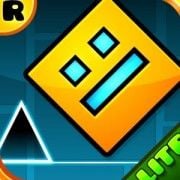
The world was made of sharp edges and glowing lines. A place where gravity flipped like a coin, and rhythm wasn’t just background music—it was the law of nature. Deep in this dimension, a lone square pulsed with life, waking for the first time on a neon-lit platform. There were no instructions, no guides—only the beat of the electronic symphony that echoed across the geometric landscape. And as the music built, so did the path before it—spikes, gaps, and spinning blades rising with each drop.
The cube didn’t ask questions. It leaped forward, driven by something unseen. Every jump was a heartbeat. Every fall a lesson. This was no ordinary world. This was Geometry Dash Lite, where rhythm is the compass, reflexes are your shield, and survival means dancing on the edge of chaos.
Geometry Dash Lite is deceptively simple: tap to jump, time it right, and don’t hit anything dangerous. But beneath that single-tap mechanic lies a meticulously crafted experience that tests a player’s precision, timing, and pattern recognition with surgical intensity.
The cube moves forward automatically, and your job is to guide it through a treacherous series of obstacles. Spikes jut out without warning, platforms float mid-air, and portals flip your gravity or transform your shape entirely. Each level is synced perfectly with an energetic electronic soundtrack, making every jump feel like a beat, and every mistake a dissonant note.
The levels are challenging, yet fair—memorization and timing are key. With no room for error, players are encouraged to repeat and refine their performance, learning the rhythm of the stage like a musician learns a song.
The success of Geometry Dash Lite isn’t built on flashy cutscenes or complex story arcs—it’s built on pure, distilled challenge. It offers a fast-paced, bite-sized experience that rewards persistence and determination. Each attempt is quick, the restart is immediate, and the sense of “just one more try” is nearly impossible to resist.
Its visual style is another hook. Bright neon colors, flashing effects, and smooth transitions turn each level into a digital light show. Combined with its powerful, EDM-inspired soundtrack, the game feels more like an interactive concert than a platformer.
Perhaps most importantly, Geometry Dash Lite respects its players. It assumes you’re smart enough to learn without tutorials, brave enough to fail repeatedly, and dedicated enough to try again—because every death brings knowledge, and every cleared spike is a personal triumph.
What started as a small game quickly evolved into a global sensation. Social media communities celebrate their favorite levels and music tracks, while content creators challenge themselves to flawless runs in front of millions of viewers. The community thrives on mastery—players sharing tips, showing off completions, and even designing their own stages in the full version’s creative suite.
Despite being a "lite" version, this game is fully capable of standing on its own. It captures the adrenaline of speedrunning, the precision of rhythm games, and the satisfaction of visual flair—all with a single button.
It’s popular among students sneaking in a level between classes, commuters chasing a high score on the train, or competitive players chasing perfect runs. The accessibility, coupled with its brutally fair difficulty, makes it a rare gem that speaks to both casual players and hardcore gamers alike.
Back in the digital dream world, the cube soars through a tunnel of spinning saws and shifting gravity. The music builds again, faster this time. The colors flash brighter. Every movement syncs perfectly to the pulse. There is no pause. No turning back. Just rhythm, reflex, and resolve.
Geometry Dash Lite is more than a game—it’s a challenge to your instincts, a celebration of rhythm, and a thrilling race against perfection. In a world of noise and distractions, it demands your full attention. And in return, it offers that rarest of rewards: the sweet, unmatched satisfaction of mastering the impossible.
Advertisement