
Advertisement
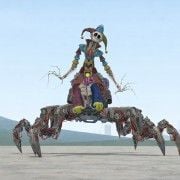
The silent, shimmering expanse of the cosmos is no longer a distant mystery but a boundless playground where the laws of physics bend to your every whim in Sandbox In Space. Imagine standing at the precipice of a digital galaxy, holding the power to ignite stars, collide planets, and engineer life-forms in a vacuum where imagination is the only true limit. This is not merely a simulation; it is an invitation to play God among the nebulae, offering a sophisticated and visually stunning environment where the chaotic beauty of the universe is yours to command. From the microscopic interactions of space debris to the cataclysmic birth of a supernova, the game places the entire spectrum of celestial mechanics within your grasp, demanding both creative vision and a curious mind to unlock its deepest secrets.
The core experience of this stellar odyssey revolves around an open-ended creative suite that provides an exhaustive library of celestial bodies, high-tech structures, and unpredictable entities. You begin with a blank canvas of dark matter and can immediately start populating your sector with terrestrial planets, gas giants, and even black holes that realistically warp the light and gravity of surrounding objects. The gameplay loop is defined by experimentation—observing how a fleet of futuristic spacecraft interacts with a sudden meteor shower or how a newly placed alien civilization adapts to the gravitational pull of a binary star system. Because there are no rigid missions, the "objectives" are self-defined, ranging from building a stable solar system to orchestrating the most visually spectacular orbital collapse ever recorded in a virtual space.
To gain a firm footing in this cosmic sandbox, the most effective approach for beginners is to start with small-scale interactions before moving to galactic engineering. Begin by placing a single sun and orbiting a few planets at varying distances to understand the relationship between mass and orbital velocity. Mastering the "pause and play" mechanic is essential, as it allows you to carefully position assets and adjust their trajectories without the pressure of real-time movement. Once you feel comfortable with basic gravity, experiment with the "spawn" tools to introduce different factions or creatures, observing their AI behaviors in a controlled environment. This incremental learning process ensures that you understand the underlying physics engine, which is the key to creating complex and stable scenarios later on.
Efficiency in a sandbox environment is measured by your ability to manipulate the environment to achieve specific visual or mechanical outcomes rapidly. To "clear" or master the complexities of space more quickly, utilize the layering system to manage multiple entities simultaneously without cluttering your interface. Using the "symmetry" and "grid" tools can significantly speed up the construction of massive space stations or fleet formations, ensuring perfect alignment in a fraction of the time. Furthermore, experienced creators often use the "time-scale" slider to fast-forward through millions of years of planetary evolution or slow down a collision to a frame-by-frame crawl, allowing for precise adjustments at the moment of impact. By focusing on these high-level manipulation tools, you can bypass the tedious manual placement and move straight to the grand spectacles that define the genre.
The artistic depth of the game is matched only by its technical ambition, featuring high-fidelity textures and lighting effects that make every solar flare and planetary ring look like a masterpiece of digital photography. It is a meditative yet intellectually stimulating journey that rewards those who dare to ask "what if" and provides the tools to see the answer play out in a spectacular display of light and motion. Whether you are interested in the scientific rigor of orbital mechanics or the sheer joy of watching two galaxies collide, the game offers a seamless and professional interface that removes the friction between thought and creation.
As you gaze upon your finished creation—a harmonious system of planets orbiting a pulsating star or a graveyard of shattered moons—the sense of scale and accomplishment is truly profound. You have shaped the void, turned the darkness into a theater of wonders, and mastered the fundamental forces that govern our existence. The universe is a vast, empty stage waiting for its next great architect to step forward and breathe life into the silence. Take your place among the stars, unleash your creativity, and let the symphony of the cosmos begin under your expert direction.
Advertisement